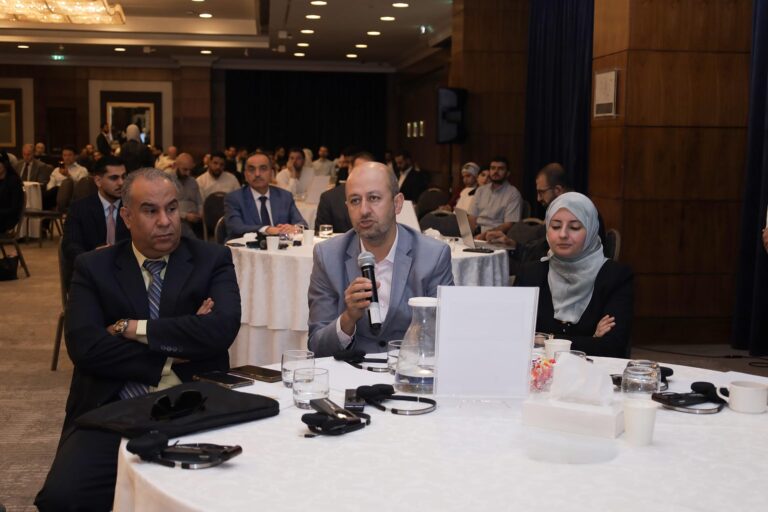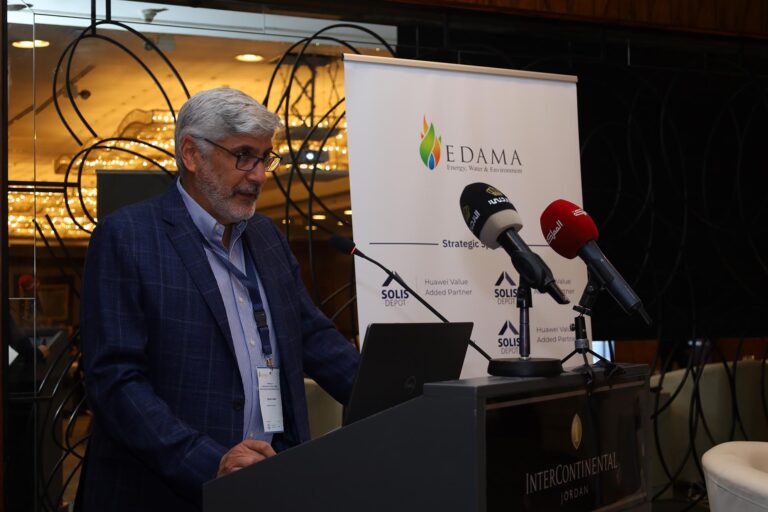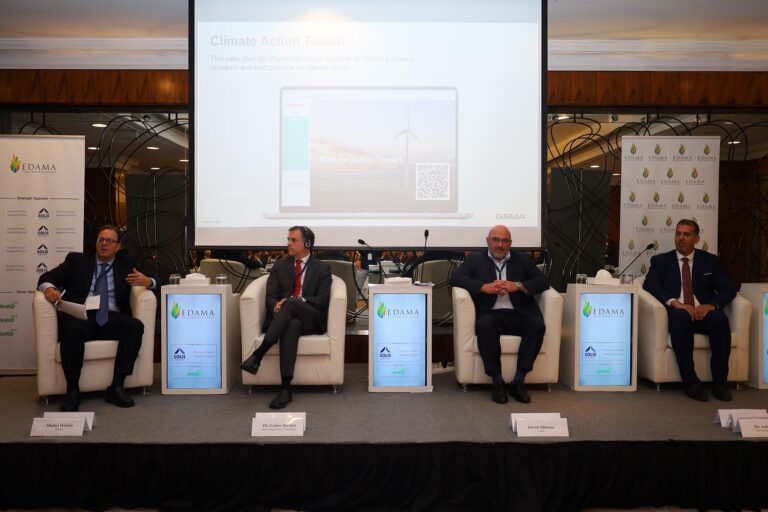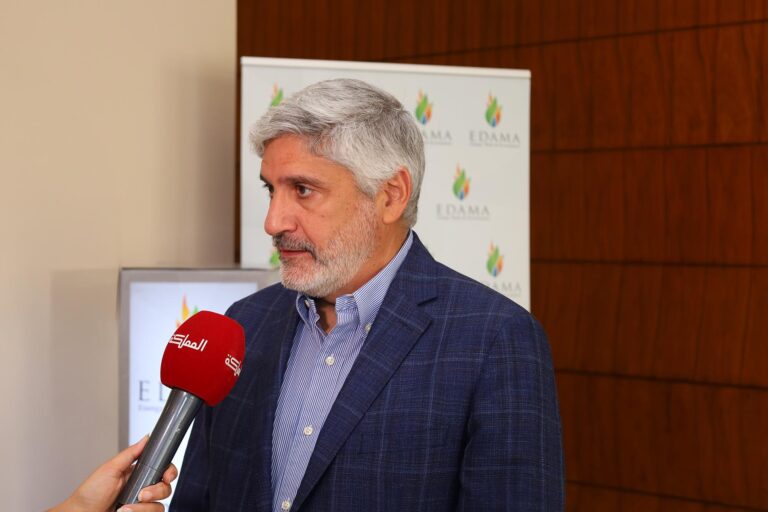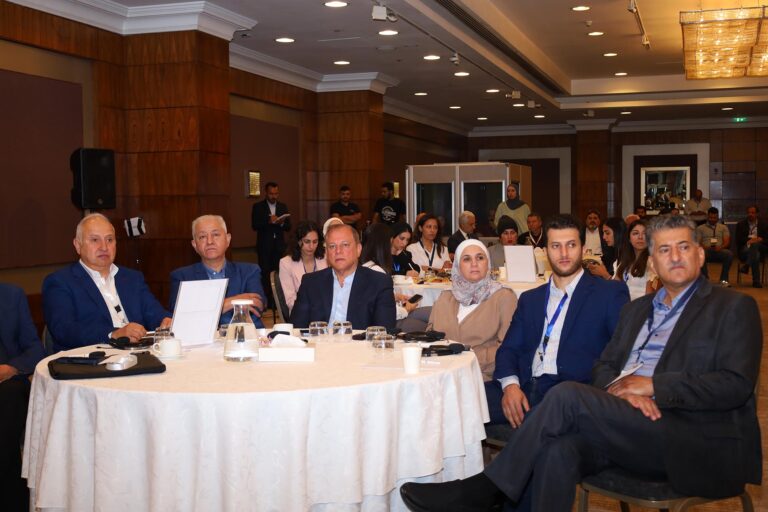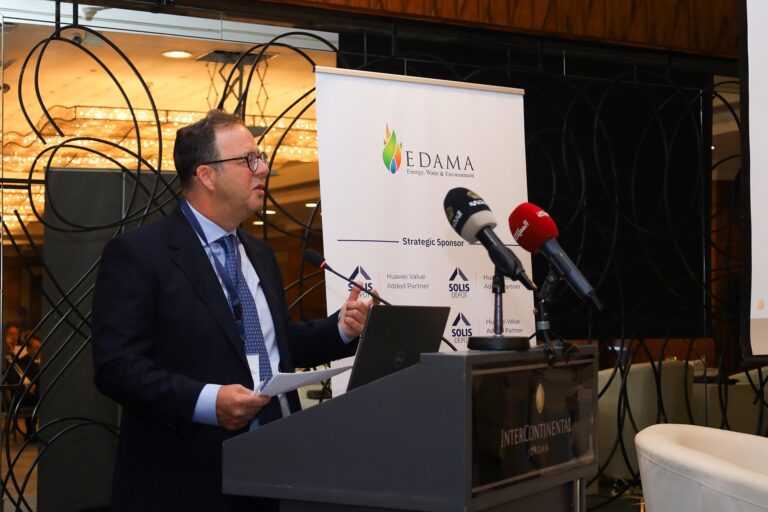
Under the patronage of Her Excellency the Secretary General of the Ministry of Energy and Mineral Resources, Eng. Amani Azzam, EDAMA – Energy, Water & Environment Association, in collaboration with the Strategic Partner Solis Depot – Huawei Value Added Partner and the Silver Partner JINKO ESS, held a workshop on 22 June 2026 in Amman, titled “Workshop on Hybrid Inverters & Battery Storage Systems – Advancing Clean Energy Solutions in Jordan”. The workshop brought together policymakers, utilities, financiers, and private sector leaders for a focused, high-level conversation on accelerating the deployment of Battery Energy Storage Systems (BESS) and hybrid inverters in Jordan and the region.
The workshop featured two panel sessions that examined the technical, regulatory, and economic dimensions of Battery Energy Storage Systems (BESS) and hybrid inverter technologies, while exploring their role in advancing Jordan’s national energy transition, strengthening grid reliability, and scaling up renewable energy integration in alignment with the Kingdom’s clean energy objectives.
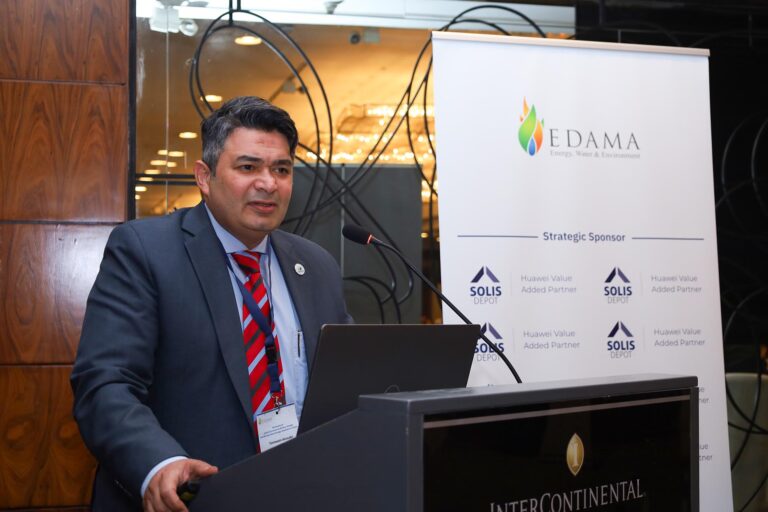
The workshop opened with a welcoming remarks by Samer Judeh, EDMA vis Chairman, who underscored the importance of adopting battery energy storage systems (BESS) and hybrid inverters as essential pillars of national energy security, particularly in light of the mounting challenges facing the sector at the local, regional, and global levels, including the ramifications of the recent war, shifting regional dynamics.
Judeh further emphasized the need for deeper public-private collaboration through the review and reform of governing regulations and legislation, and enhanced coordination across the local market, with a view to expanding the deployment of these technologies and maximizing their developmental, economic, and strategic impact in the long term.
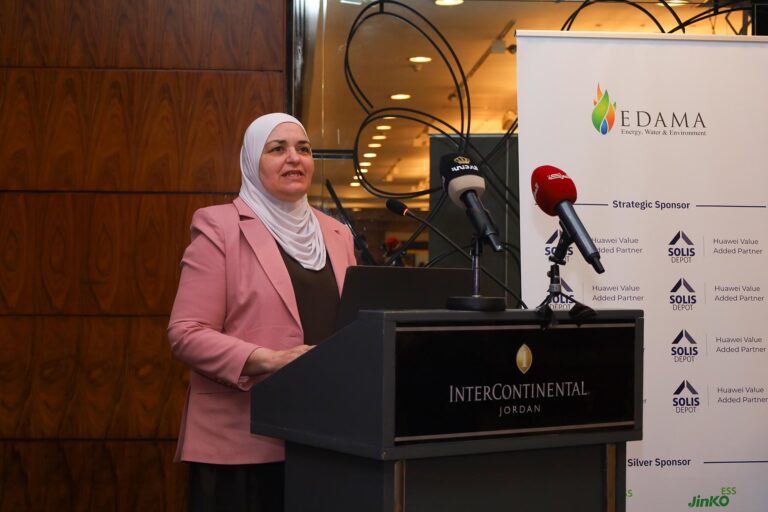
For her part, Her Excellency the Secretary General of the Ministry of Energy and Mineral Resources, Eng. Amani Azzam, affirmed the importance of keeping pace with the rapidly evolving developments in the renewable energy sector, including energy storage systems and hybrid inverters, noting the Ministry’s and the government’s commitment to supporting and facilitating initiatives and programs that contribute to enhancing national energy security, in alignment with Jordan’s national objectives and the Economic Modernization Vision.
Her Excellency further emphasized the importance of the role of all local and international partners in working closely and in an integrated manner, and strengthening channels of cooperation and coordination among them, in order to implement projects in the most effective way, supporting the development and efficiency of the sector to address the future changes and challenges and respond to them more effectively, with a positive reflection on the long-term sustainability and stability of the sector.
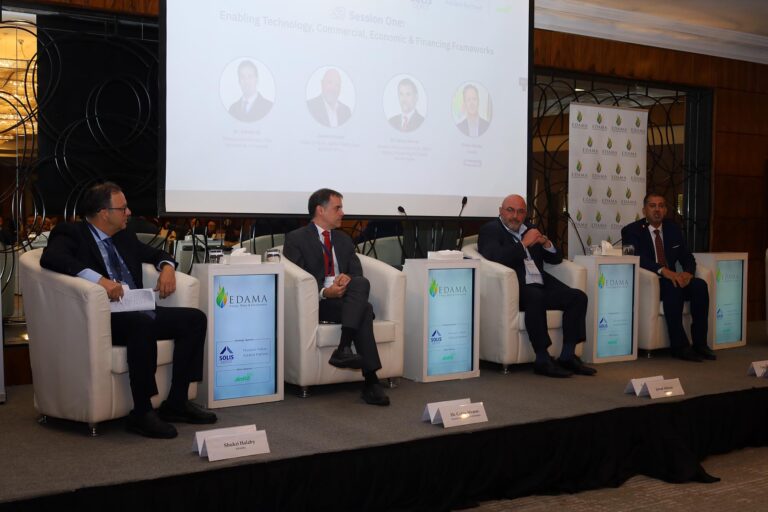
The first panel session, titled “Enabling Technologies, Commercial, Economic & Financing Frameworks,” brought together Dr. Carlos Alvarez, Director of Grid Connection at Huawei, Mr. Jawad Abbassi Head of MENA, GSMA, and Dr. Ashraf Ali, Electrical Engineering Department at The Hashemite University representing the academic sector, with the session moderated by Mr. Shukri Halaby of EDAMA – Energy, Water & Environment Association.
Mr. Shukri Halaby opened the session with introductions of the panelists, setting the stage for an in-depth exchange of views on the role of battery energy storage systems (BESS) and hybrid inverters in advancing energy economic sovereignty across Jordan and the wider region, the capacity of these technologies to serve as a buffer against the economic ramifications of geopolitical instability and its impact on energy prices, as well as a review of the key financing mechanisms and frameworks needed to accelerate the large-scale deployment and adoption of these solutions.
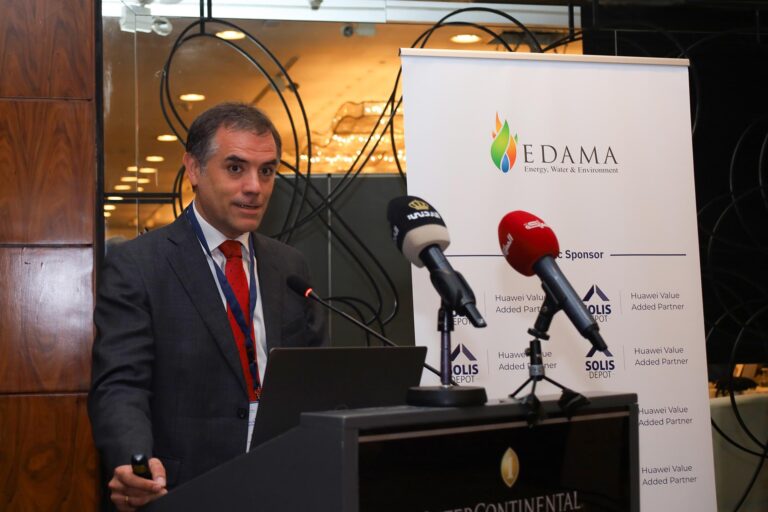
During the session, Dr. Carlos Alvarez delivered a comprehensive and technical presentation covering the latest global technologies and solutions in the field of hybrid inverter systems and battery energy storage (BESS), highlighting the technical specifications and operational features that position these systems as a cornerstone in building more resilient, efficient, and sustainable energy infrastructures.
Dr. Alvarez also mentioned that the integration of battery energy storage systems and hybrid inverters represents one of the most critical enablers of energy security and grid resilience, illustrating how these technologies can contribute to reducing operational costs, improving energy efficiency, and scaling up renewable energy dependence, while also supporting price stability and mitigating instability. He further highlighted a range of practical models and real-world applications demonstrating how to maximize the economic and investment returns of these systems, reinforcing their capacity to generate sustainable added value for investors, the energy sector, and the national economy alike.
Mr. Jawad Abbasi highlighted that investment in the renewable energy sector plays a key role in reducing carbon emissions and advancing sustainable development across all stages of supply chains, noting that such investments support national and global efforts to achieve the 2030 goals related to energy, environmental sustainability, and economic growth.
Meanwhile, Dr. Ashraf emphasized the pivotal role of hybrid inverters in enhancing energy efficiency and optimizing energy management, noting that the integration of artificial intelligence technologies can significantly improve the intelligence of these systems, enabling faster, more accurate, and data-driven decision-making. He also highlighted the importance of strengthening collaboration between academia and industry, emphasizing that scientific research and academic institutions play a vital role in developing the skills and innovative solutions required by industrial sectors to achieve long-term sustainability goals.
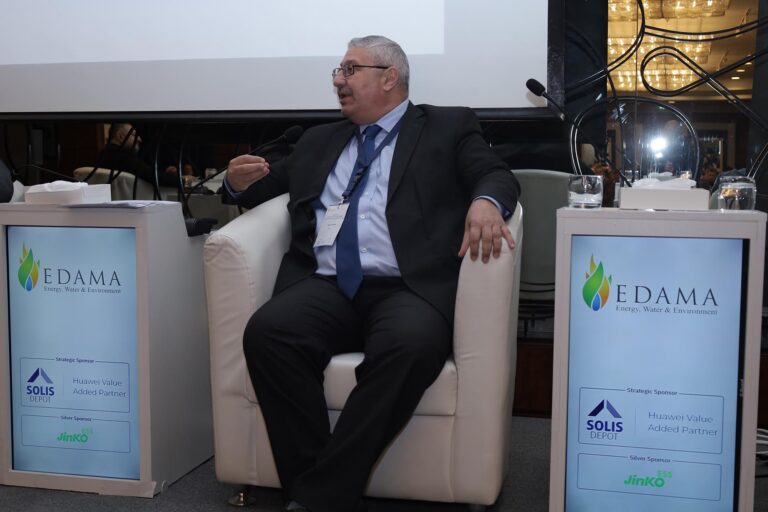
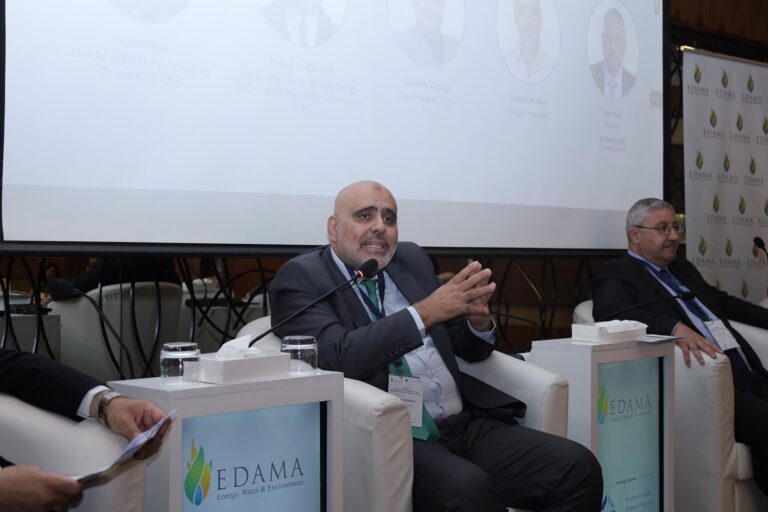
The second panel session, titled “Enabling Jordan’s Energy Potential — Landscape, Policy & Regulation,” was moderated by Mr. Fadi Marji, Board Member of EDAMA Association, and brought together a distinguished group of specialists in energy policy, regulatory frameworks, and technical consulting within Jordan’s energy and renewable energy sector.
The session featured the participation of Dr. Qaddous Miqdad, Technical Advisor in the Energy Sector, Mr. Tamim Al-Zo’bi, Vice President of the Renewable Energy and Energy Efficiency Companies Association in Jordan (REES), Eng. Ahmad Al-Khataybeh, Renewable Energy Section, Energy and Minerals Regulatory Commission (EMRC), alongside Eng. Yaqoub Marar, Director of the Energy Transition at the Commission (EMRC).
The discussions focused on the importance of reassessing the regulatory frameworks organizing the sector and aligning national policies and procedures with the evolving regional landscape and its implications for the Jordanian energy market, including the Regulation No. 58 of 2024, as well as the strategies and action plans adopted by the Ministry of Energy and Mineral Resources and the Energy and Minerals Regulatory Commission (EMRC) to support sector growth and strengthen its capacity to navigate future challenges.
In this context, Eng. Tamim Al-Zoubi delivered a presentation highlighting the key proposed amendments to Regulation No. 58, emphasizing the growing importance of energy storage systems as a fundamental component of the renewable energy sector. Al-Zoubi noted that energy storage systems play a critical role in providing backup power and enhancing the flexibility and stability of the electricity grid, calling for the development of a clear regulatory framework to ensure their effective integration into the national energy system.
For his part, Eng. Miqdad Qaddous stressed the need to focus future efforts on updating regulations and instructions to reduce energy costs and encourage investment in energy storage technologies. He highlighted Jordan’s strong potential in this field, driven by its abundant solar resources, and underscored the importance of developing electricity tariff structures that align with time-of-use principles to improve energy management and system efficiency.
For his part, Eng. Yacoub Marrar noted that Jordan has achieved significant progress in the renewable energy sector; however, initiatives related to energy storage systems and hybrid inverters require comprehensive technical and economic assessments before the adoption of dedicated legislation. He stressed the importance of engaging all relevant stakeholders to ensure a supportive environment for the expansion of these technologies and the development of the necessary infrastructure for their sustainable and flexible integration, while minimizing any potential future challenges. Marrar also emphasized the need to ensure a just energy transition that delivers shared benefits to all parties, highlighting the government’s openness to opportunities that strengthen energy security, provided that decisions are based on thorough studies aligned with Jordan’s national vision and strategic priorities for the sector.
Meanwhile, Eng. Ahmad Al-Khataybeh underscored that the rapid pace of technological advancement in the energy sector necessitates the continuous modernization of legislation and regulatory frameworks. He noted ongoing efforts to collaborate with relevant stakeholders to review the current regulatory environment and develop an electronic platform aimed at streamlining procedures for the private sector. He also highlighted the expansion of smart meter deployment, renewable energy projects, and energy storage systems as key components of Jordan’s evolving energy landscape. Eng. Ahmad had also stressed that citizens remain central partners in shaping and managing Jordan’s energy sector, underscoring the need for an inclusive energy transition that balances sector development, energy security, and the interests of consumers.
In conclusion, this workshop among of a series of national dialogues conducted by EDAMA Association on key issues and critical sectors in Jordan, which ensuring a transparent and open national dialogue involving all stakeholders in the energy, water, and environment sectors, contributing to enhanced knowledge exchange and improved coordination among relevant entities, while supporting the development of policies and sustainable solutions at both the national and sectoral levels.