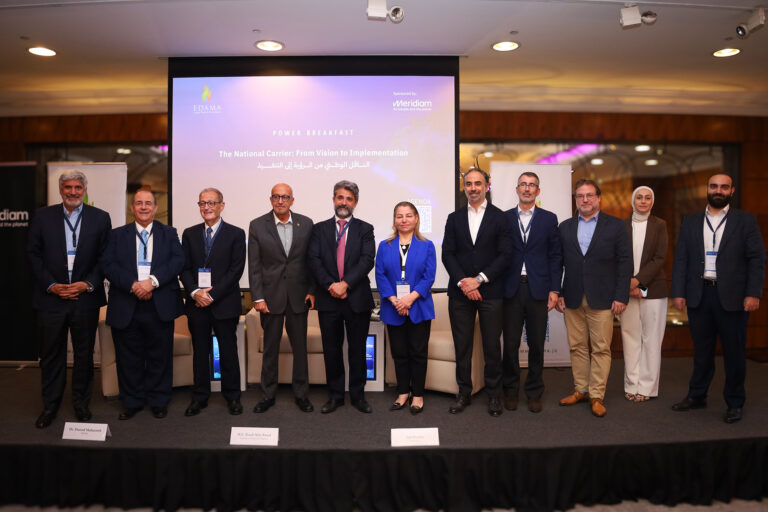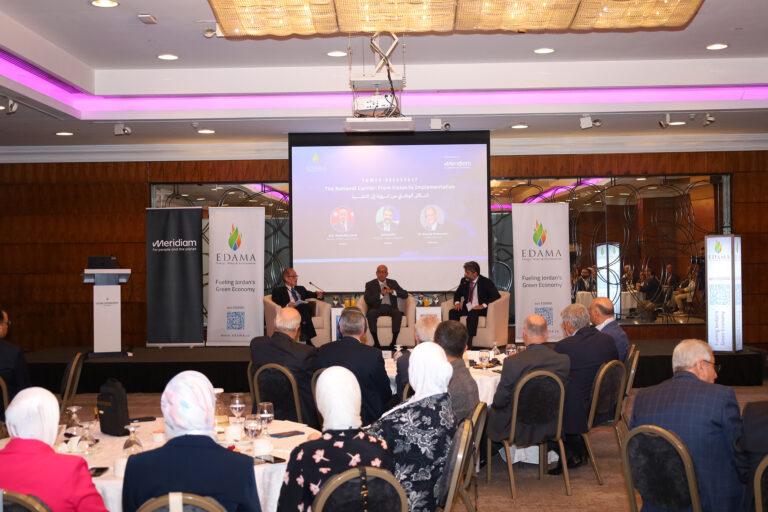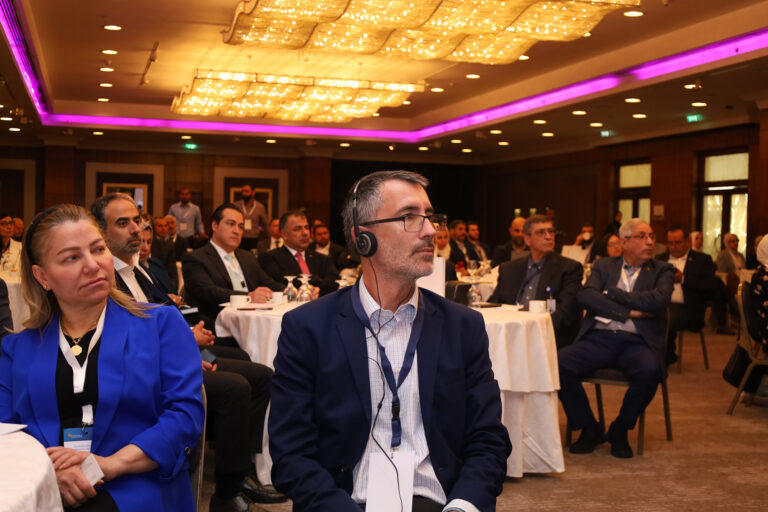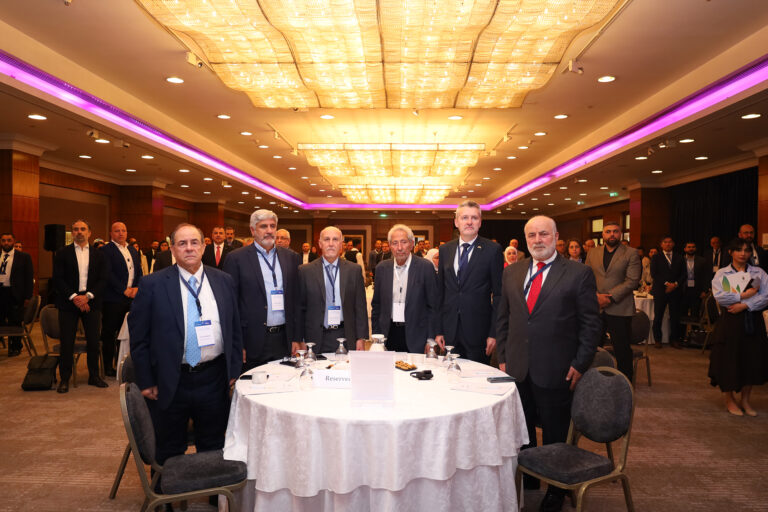
Under the patronage of H.E. Eng. Raed Abu Al-Saud, Minister of Water and Irrigation, EDAMA Association for Energy, Water and Environment, in cooperation with Meridiam Jordan, held a Power Breakfast event on Thursday, May 14, 2026, in Amman, titled “The National Carrier: From Vision to Implementation.” The event brought together a distinguished group of representatives from the public and private sectors, local and international organizations and institutions, as well as research centers and youth organizations working in the fields of development, environment, and climate in Jordan.
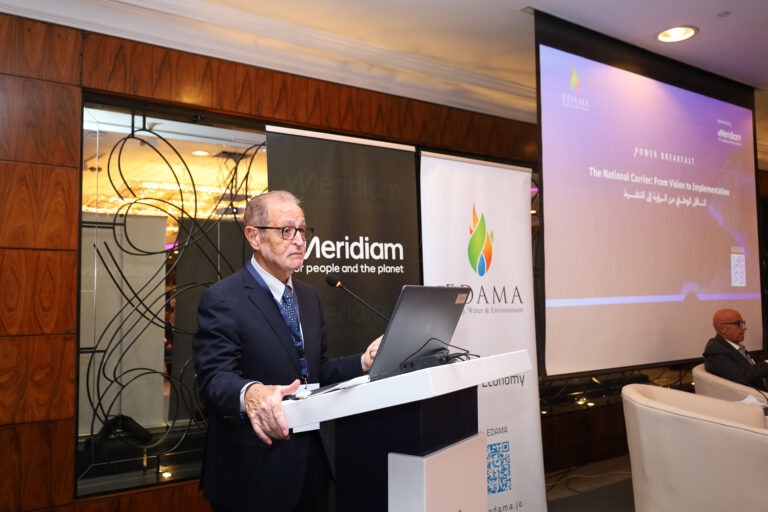
In his welcoming remarks, Dr. Dureid Mahasneh, Chairman of EDAMA, emphasized the strategic importance of the National Water Carrier Project in strengthening Jordan’s water security system amid the increasing challenges facing the sector, including the impacts of climate change, regional developments, and the pressure placed on the Kingdom’s water infrastructure due to the refugee crisis. He also stressed the importance of integrated cooperation between the public and private sectors in the fields of water and climate action to enhance implementation efficiency and maximize the project’s long-term developmental and strategic impact.
For his part, H.E. Eng. Raed Abu Al-Saud, Minister of Water and Irrigation, affirmed that the National Water Carrier Project has evolved beyond being a service-oriented water project to become a sovereign national project that reinforces Jordan’s national security and water independence. He noted that the government is committed to launching the implementation phase before the summer of this year, in partnership with local and international stakeholders, in line with the Royal directives.
The Minister reviewed the major challenges facing Jordan’s water sector, most notably the decline in annual per capita water availability to less than 60 cubic meters for all uses. He emphasized that the National Water Carrier Project is considered one of the Kingdom’s most strategic projects for securing sustainable water resources by transporting desalinated water from Aqaba to various governorates across Jordan. He also noted that the Ministry has finalized most of the technical and contractual procedures and is now moving toward the actual implementation phase in the near future.
Abu Al-Saud further explained that the government’s plans extend beyond implementing large-scale infrastructure projects and also focus on reducing water loss, combating illegal water network violations, and expanding the use of modern technologies such as cloud seeding and underground dam experiments. He additionally highlighted the importance of utilizing treated wastewater as a sustainable non-conventional water source and stressed the need to continue developing future innovative water solutions to address Jordan’s growing water challenges.
He added that the government worked to secure a 30% contribution to the project cost in order to reduce the cost per cubic meter, similar to the successful approach adopted in the Disi Project. He further indicated that water pumping from the Disi aquifer had reached its maximum annual capacity of 120 million cubic meters and that the aquifer witnessed a noticeable improvement during the last rainy season in both water levels and water quality.
Meanwhile, Eng. Jad Hreibe, Director of Meridiam in Jordan and representative of the project consortium, delivered a comprehensive technical presentation on the National Water Carrier Project, describing it as the largest water infrastructure project in Jordan’s history. He explained that the project is based on desalinating seawater from the Gulf of Aqaba and conveying it through an extensive network of pipelines spanning long distances to supply various regions across the Kingdom.
Hreibe noted that attracting major infrastructure investments in the region is considered a significant challenge, yet Jordan has successfully strengthened the confidence of international institutions and investors due to its stability and investment environment. He added that the participation of the Jordanian government, local banks, and the Social Security Investment Fund played a major role in reducing financing costs, affirming that the project’s financing has been fully secured, pending the signing of a few remaining agreements to complete the financial close.
He also explained that Meridiam is a French investment fund specialized in long-term infrastructure projects and announced that implementation is expected to begin within two months, with broad participation from Jordanian contractors and companies. The construction phase is expected to last four years, followed by a 26-year operational period. He further highlighted that the project’s solar power plant will be the largest in Jordan and will provide approximately 30% of the project’s energy needs.
During the discussion session, speakers engaged with participants’ questions, which focused on the project’s implementation and financing mechanisms, its expected impact on Jordan’s water sector, the renewable energy components associated with the project, as well as its environmental and social dimensions. Discussions also addressed the measures being taken to mitigate environmental impacts based on the Environmental Impact Assessment studies that have already been conducted and will continue to be updated throughout the various stages of implementation.
It is worth noting that the Power Breakfast is part of a series of events organized by EDAMA Association for Energy, Water and Environment, aimed at fostering dialogue between the public and private sectors and bringing together decision-makers and key stakeholders to discuss national priority issues, while building partnerships that support sustainable development and green growth in Jordan.